Why Do Luxury Brands Use Polyester? I Pulled the Fiber Line From Six Satin Dresses, $89.50 to $820
Six product pages, $89.50 to $820. Each prints a fabric word where you'll read it and a fiber line where you won't. Only one of those is regulated, and only one dress breaks the pattern.
 ·
· 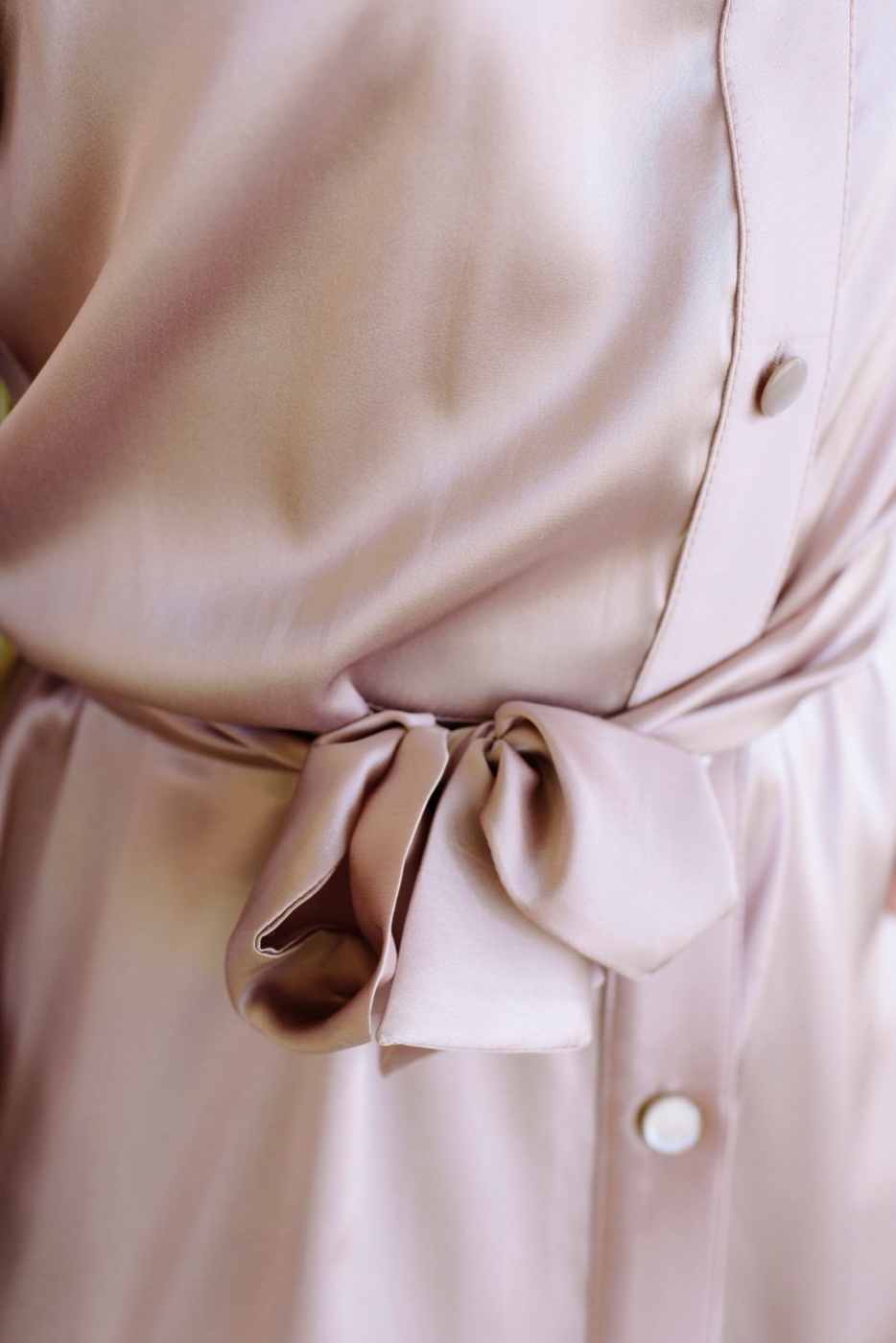
The first dress in the chain costs $89.50. It’s the Chelsea28 Cowl Neck Seamed Satin Midi at Nordstrom, and its product page does what every page in this story does: it says satin up top, in the name, where you’re reading, and it states the fiber further down, in the details, where you’re mostly not. From that first cell the chain climbs. $158 at Madewell. £199 at John Lewis. $650 at Ulla Johnson, then $820 at Ulla Johnson again, because once I’d started I wanted to see where it stopped.
Quick disclosures, since this is a money story. Nobody in this table pays us, there isn’t an affiliate link on this site, and whether you buy the $89.50 dress, the $820 one or neither changes nothing for me. This is also a desk read: I haven’t touched a single one of these dresses. What I did was pull all six pages myself on October 1 and copy each fiber line exactly as the seller printed it. Oh, and the sixth dress, the one I haven’t mentioned yet. It costs 40 cents more than the first one, and it’s the reason this piece exists.
WHY DO LUXURY BRANDS USE POLYESTER?
Luxury brands use polyester because polyester satin delivers the shine and the drape of silk at a fraction of the input cost, and the only place a product page must admit the swap is one small line that US labeling law forces onto it. The Textile Fiber Products Identification Act requires sellers to disclose fiber content by generic names. That’s the whole mandate. “Fiber content,” in generic words like polyester and silk. The adjectives around it, drapey, high-shine, jeweled, are unregulated, and that’s where the selling happens.
So here is the chain, with the regulated line and the unregulated words side by side. Prices are what each page displayed on October 1, 2026; the Ted Baker figure is John Lewis’s own sterling print, since that one’s a UK retailer.
| Dress | Where I read it | Price as printed | What the page calls it | The fiber line as printed |
|---|---|---|---|---|
| Chelsea28 Cowl Neck Seamed Satin Midi | Nordstrom | $89.50 | satin | “100% polyester” |
| 100% Washable Silk Slip Dress | Quince | $89.90 | washable silk, satin finish | “100% mulberry silk” |
| The Elena Midi Dress | Madewell | $158 | drapey satin | “100% polyester (52% of which is recycled)” |
| Ted Baker JOWRA Sleeveless Satin Midi | John Lewis (UK) | £199 | satin | “100% polyester” |
| Oriana Satin Dress | Ulla Johnson | $650 | high-shine satin | “100% polyester” |
| Malin Satin Dress | Ulla Johnson | $820 | jeweled, high-shine satin | “100% polyester” |
Read the right-hand column top to bottom. Five of the six entries are identical, and the price multiplies by nine along the way. The one line the law regulates is the one line that never moves.
SATIN IS A WEAVE, NOT A FIBER
Satin names a weave structure, one of the three basic textile weaves, and a satin dress can be woven from silk, polyester or almost anything else that takes the structure. Britannica’s textile entry is blunt about the history: originally a silk fabric, now made of other fibers. Which means the word satin on a product page is telling you how the threads cross, not what the threads are. Every seller in my table uses it correctly. And every seller in my table knows most shoppers hear it as a material.
That’s what makes the second row the interesting one. The $89.90 slip at Quince prints “100% mulberry silk,” the fiber satin originally meant, at 40 cents above the polyester dress one row up. I’ll flag the asterisks myself before you find them: Quince prints a “traditional retail $228” comparison next to that price, which is the same anchor theater we took apart in our compare-at piece, and washable silk is a thin, launder-friendly silk, not the heavy charmeuse of a vintage slip. We’ve been measured about this brand before (the cashmere held up, with caveats). But the fiber line is the fiber line. In a six-dress chain it’s the only row where the regulated words got more expensive to print, and the price barely registered it.
IS A 100% POLYESTER DRESS BAD?
A 100% polyester satin dress is a perfectly reasonable purchase at $89.50 and a strange one at $820, because the fiber is the same product at both prices and everything above the first number is paying for something else. Polyester has honest virtues. It holds a print better than silk, it shrugs off wrinkles, it usually goes in the washing machine, and it’s the reason the Chelsea28 can exist at all. If you need a dress for one wedding and a red-wine radius, $89.50 of polyester is the correct tool (the Madewell version even runs 52% recycled, if that moves you).
The virtues thin out as you climb. By the top of the chain you’ve lost even the convenience argument: the $650 Oriana prints “Dry clean only” on a 100% polyester dress, which is silk’s maintenance bill attached to polyester’s fiber line. What you’re buying up there, and I want to be fair about this, is real: Ulla Johnson’s pleating, the seashell print, the cut, the open back, the label itself. Those can be worth $650 to you. On paper, the fabric isn’t the part that got better, and the page never claimed it did. It just said high-shine satin and let the word do what the word does.
READ THE CHAIN BACKWARDS
Walk the chain in reverse, $820, $650, £199, $158, $89.90, $89.50, and the story it tells flips. On the way up it looked like a price climbing. On the way down you can see the fabric never climbed with it: the fiber line sits flat at “100% polyester” the whole descent, until the second-to-last step, where the only actual silk in the chain appears at $89.90. What climbed was cut, print, name and nerve, stacked on top of a fiber line that stopped moving at the bottom.
So, the verdict this site exists to give. If the word satin is what’s selling you a dress, you can skip everything in that table above $89.90, because the word means the same thing at every altitude and the silk it’s borrowed from lives on the cheapest shelf. And if you’re buying the $820 Malin, buy it for the pleats and the print with my blessing. Just know which line on the page you’re paying for. The fabric stops at $89.50. Everything after that is the dress.