What Does 'Recycled Polyester' Mean in Clothing? We Read Five Tags and the Rule Behind Them
One fleece says 100 percent. One legging says 25 bottles. One hoodie says nothing at all until you open the materials drawer. The federal rule that governs all three has been printed since 2012. The second rulebook started running on September 27, so I opened the same five pages again that night.
 · · Updated September 28, 2026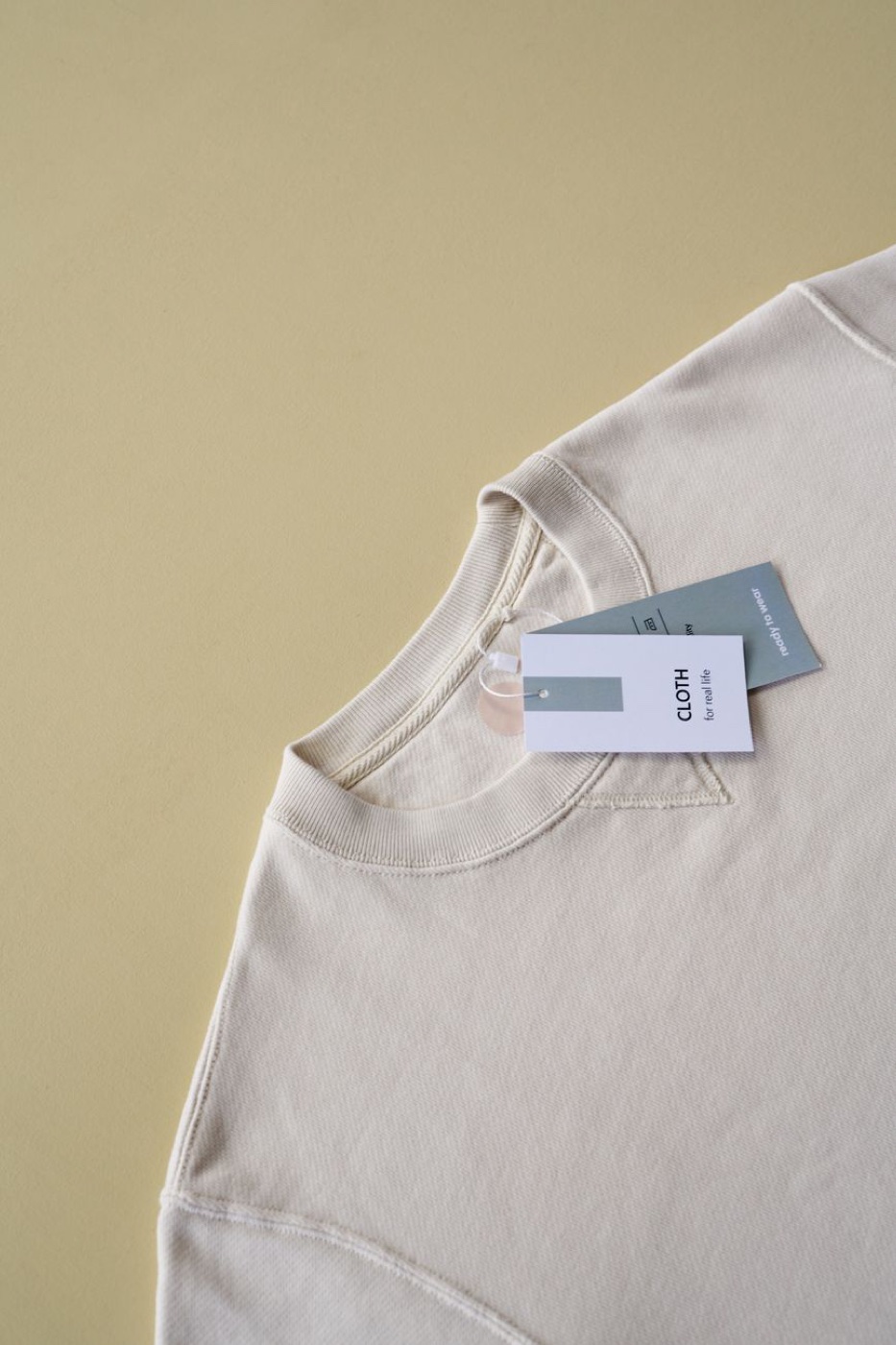
At first glance the words on the swing tag look like a finished answer. Recycled polyester. Two words, one material, nothing left to ask.
They’re anything but. Across the five garment pages I opened this morning, those two words carried five different amounts of actual recycled fibre, counted in three different units, and once they arrived in a sentence that never touched a number at all.
The word is doing one job. The number underneath it is doing a different one, and the rule that separates them has been sitting on a federal website since 2012.
Nothing here was worn, washed, or sent to a lab. I read product pages and regulatory text on September 14, 2026, and every figure below is copied from a document anyone can open. The requests went out from Korea, which matters in one place I’ll flag later.
Then the European rule those pages were waiting on started to apply on 27 September, and I went back to all five of them that night. The last section before the sources is what the second reading found.
What does ‘recycled polyester’ actually have to contain?
The Federal Trade Commission’s Green Guides, published as 16 CFR Part 260, set the floor in the United States, and section 260.13 is four paragraphs long. Paragraph (c) is the one that decides how a tag reads: “Marketers can make unqualified claims of recycled content if the entire product or package, excluding minor, incidental components, is made from recycled material. For items that are partially made of recycled material, the marketer should clearly and prominently qualify the claim to avoid deception about the amount or percentage, by weight, of recycled content in the finished product or package.”
Read that twice, because a bare claim means effectively all of it. Anything short of that is supposed to arrive with a number attached, and the number’s by weight, not by feel and not by fibre count.
Paragraph (b) adds a second test, about where the material came from. Content only counts as recycled if it was “recovered or otherwise diverted from the waste stream, either during the manufacturing process (pre-consumer), or after consumer use (post-consumer).” The guides then spend seven worked examples on the ways that goes wrong, and Example 1 is the sharpest of them: a manufacturer who sweeps up its own spills and scraps, reprocesses them lightly, and blends them back into the same product is told the claim “is deceptive since the spills and scraps are normally reused by industry within the original manufacturing process and would not normally have entered the waste stream.” Factory offcuts that were never going anywhere don’t count. Someone else’s bottle does.
So a tag that reads recycled polyester and stops there isn’t the soft version. It’s the strong one. The soft version is the one carrying a percentage.
Why does one tag say 79 percent and another say 25 bottles?
Five garment pages, five ways of counting. I picked items that are in season right now, all of them fleece or knit, and copied the wording exactly as each page prints it.
| Page | How the material is named | Number printed | Certification named |
|---|---|---|---|
| Patagonia Better Sweater Fleece Jacket | “100% Recycled Polyester Sweater-Knit Fleece” | 100 percent body, 100 percent trim and pocket bags | bluesign approved |
| Madewell (Re)sourced Fleece Cardigan Jacket | “(Re)sourced 100% recycled polyester fleece” | 100 percent, from “100% postconsumer waste” | none on the page |
| Everlane Cropped Luxe Fleece Hoodie | “organic cotton and recycled polyester brushed fleece” | 67 percent organic cotton, 33 percent recycled polyester | none on the page |
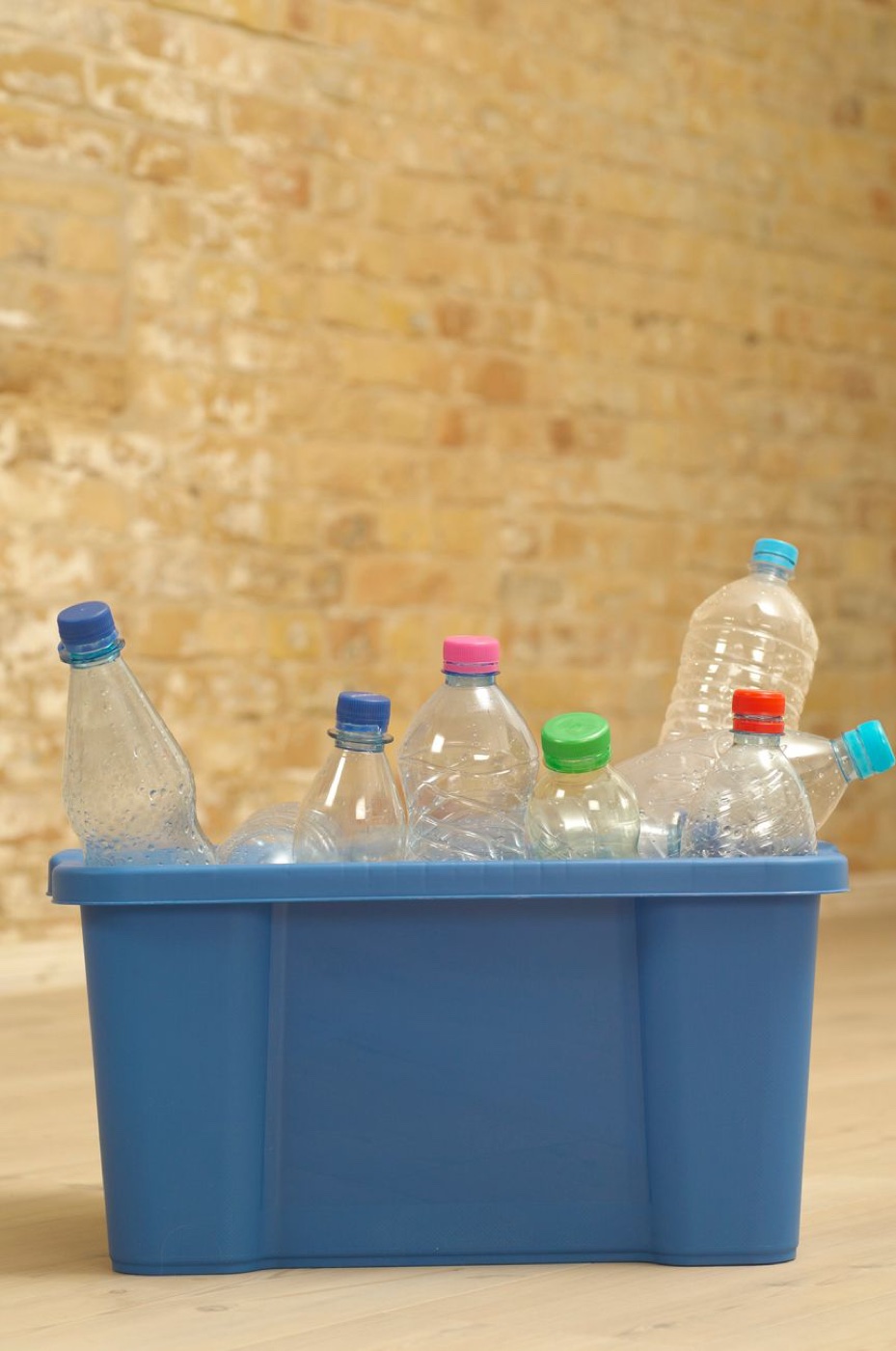
| Girlfriend Collective Compressive High-Rise Legging | “79% recycled water bottles (RPET) and 21% spandex” | 79 percent, plus “25 recycled water bottles” | OEKO-TEX Standard 100 |
| Patagonia Spring 2026 polyester fabric, all styles | “recycled polyester fabric, by weight” | 94 percent, with virgin polyester at 6 percent | Recycled Claim Standard, Global Recycled Standard |
Three units in one table.
Percentage by weight is the unit the Green Guides ask for. Bottle count is a different animal, because a bottle isn’t a weight and nobody standing in a shop knows what 25 of them add up to inside a legging. Girlfriend Collective prints both, which is the version I’d want everywhere, though the percentage still sits inside the Fabric and Care drawer rather than up in the description where the bottles are.
The fifth row is the odd one, and it’s odd on purpose. Patagonia’s 94 percent isn’t a garment number at all. It describes the whole Spring 2026 line, measured across every polyester fabric by weight, and the company puts the remainder in the same paragraph: “Virgin polyester, on the other hand, accounts for only 6% of total polyester fabric (by weight) used in our entire Spring 2026 line.”
A line-level figure tells you about a company, not about the jacket in your cart. The two get quoted interchangeably anyway.
Does the claim cover the whole garment?
Everlane’s hoodie is the cleanest illustration of the gap, and it isn’t hiding anything. The description at the top of the page reads “made with cozy organic cotton and recycled polyester brushed fleece,” with no figure anywhere in that sentence. Open Materials and Care further down and the line reads “Materials: 67% Organic Cotton, 33% Recycled Polyester.” Both statements are true. Only one of them is a measurement, and it’s the one behind a click.
That pattern shows up on the standards side too. Patagonia names the Recycled Claim Standard and the Global Recycled Standard as the certifications it asks suppliers to hold, and says they’re there so that “robust chain of custody practices are in place.” I wanted to read the thresholds in those two standards directly.
I couldn’t. The organisation that owns them disallows our crawler in its robots file, so I didn’t request the pages, and you won’t find a claim here about what those thresholds are.
The same applies to the shops that never rendered. H&M, Uniqlo, REI, Old Navy, The North Face, L.L.Bean and J.Crew handed back navigation shells, 403s or blank product frames on the paths I tried, so none of them are in the table. Five brands is five brands. It isn’t the market, and a name missing from the table isn’t evidence of anything.
One more note on where I was standing while reading. Everlane’s page served me a Korean shell with a won price, Girlfriend Collective served dollars, and the composition fields came back identical either way. Prices route by geography. Fibre percentages, on these pages at least, didn’t. That’s worth knowing before anyone quotes a US price off a page read from somewhere else.

What does the European rule actually prohibit?
Directive (EU) 2024/825 began applying on 27 September 2026, and its Article 4 sets that date in one line: “By 27 March 2026, Member States shall adopt and publish the measures necessary to comply with this Directive. They shall immediately inform the Commission thereof. They shall apply those measures from 27 September 2026.”
It doesn’t govern a tag in Ohio or Manchester. It governs the same brands in a market most of them sell into, which is why the wording on international product pages is worth watching this autumn, and three of its passages bear on the tags above.
The first lists the words that stop working on their own. Recital 9 names “environmentally friendly,” “eco-friendly,” “green,” “climate friendly,” “carbon friendly,” “biodegradable” and “biobased” as generic environmental claims, prohibited where recognised excellent environmental performance can’t be demonstrated. A claim escapes that list when the specification is given “in clear and prominent terms on the same medium,” and the text hands over its own contrast: “climate-friendly packaging” is generic, while “100 % of energy used to produce this packaging comes from renewable sources” isn’t.
The second goes after marketing vocabulary directly. Recital 10 says a trader “should not make a generic claim such as ‘conscious’, ‘sustainable’ or ‘responsible’ based exclusively on recognised excellent environmental performance,” because those words also carry social meaning.
Three of the most common collection names in mid-market fashion are sitting in that one sentence.
The third is the one that matters for a 33 percent hoodie. Recital 11 targets “making an environmental claim about the entire product or the trader’s entire business when it actually concerns only a certain aspect of the product.” That’s the gap between a description and a materials field, written down.
Article 2 then draws the boundary the other three passages rest on, and the wording is worth having in full: “‘generic environmental claim’ means any environmental claim made in written or oral form, including through audiovisual media, that is not included on a sustainability label and where the specification of the claim is not provided in clear and prominent terms on the same medium.” Specification, clear and prominent, same medium. If the number isn’t beside the word, the word is the claim.
Did anything on the five pages change on September 27?
Three of the five pages re-read the way they read on September 14. Two of them would not open at all. My second pass went out at 21:30 in Brussels on the twenty-seventh, inside the first day of application, which was already the twenty-eighth on my own clock in Seoul.
| Page | Field the first reading logged | Same field at the second reading |
|---|---|---|
| Patagonia Better Sweater Fleece Jacket | “100% Recycled Polyester Sweater-Knit Fleece” | not readable |
| Madewell (Re)sourced Fleece Cardigan Jacket | “(Re)sourced 100% recycled polyester fleece” | identical, word for word |
| Everlane Cropped Luxe Fleece Hoodie | description with no figure, then “67% Organic Cotton, 33% Recycled Polyester” | identical, both halves |
| Girlfriend Collective Compressive High-Rise Legging | “79% recycled water bottles (RPET) and 21% spandex” | identical, still inside the drawer |
| Patagonia Spring 2026 polyester fabric, all styles | 94 percent by weight, virgin polyester at 6 percent | not readable |
Both Patagonia rows failed for the same reason, and it isn’t a refusal. Every path I asked for on that domain, the robots file included, came back as the same 14,031 byte page: “Sit tight. We’ve got our hands full at the moment but we should be up and moving shortly. This page will automatically refresh and bring you into the website as soon as we can handle it.” Five requests spread over two minutes, the identical page each time. That’s a virtual waiting room, the kind a shop puts in front of a checkout queue, and the Internet Archive’s most recent capture of the same URL, from September 16, is the waiting room as well. The 94 percent figure is therefore unconfirmed at the second reading. Unconfirmed is not withdrawn, and I’m not going to report it as either.
The waiting room did print one thing worth keeping. It lists direct sales contacts for Austria, Denmark, France, Germany and Ireland, which is the plainest possible confirmation that the brand in rows one and five sells into the market where the new rule now runs.
On the three pages that did open, the unit layer sat exactly where it was. Madewell’s sentence is unchanged down to the parentheses. Everlane’s description still says “cozy organic cotton and recycled polyester brushed fleece” with no figure in it, and the 67 and the 33 are still one click below in Materials and Care. Girlfriend Collective still counts 25 bottles up top and prints 79 percent inside Fabric and Care. Whatever the directive is doing in Europe, it did not move a number or a word on the pages a shopper in Ohio or Manchester reads on day one.
Two things on those pages weren’t in my September 14 notes, so I can log them and I can’t date them. Everlane’s materials drawer carries a “Did You Know?” block that ends “Together, they make a fabric that’s lighter on the planet and still feels just right on you.” Girlfriend Collective’s description opens by calling the item “ultra-high rise sustainable leggings made from 25 recycled water bottles,” and a bullet further down reads “OEKO-TEX® Standard 100 certified recycled fabric,” then “safe for you, sustainable for the planet.” Sustainable is one of the three words Recital 10 names. In both cases the number that would specify the claim lives behind a click, which is the arrangement Article 2 describes when it asks for specification on the same medium.
One geographic caveat, because it cuts against a tidier version of this section.
Everlane’s site serves the same hoodie under an /eu/ path, and I fetched it hoping for a European rendering to compare. The body came back identical to the default one, character for character, and the location selector on it still reported South Korea and Korean won. I do not have an EU routed reading of that page, so nothing above should be read as one.
None of this makes any of the five pages wrong. I’m not calling anything deceptive and I haven’t checked a single page against an enforcement standard. Patagonia and Girlfriend Collective print percentages in the open, Madewell says post-consumer and means it as a specific claim, and Everlane’s number exists one click below the sentence that omits it. The label reading you’d do on a wool jumper works the same way here, and it’s about the same twenty seconds of work.
What’s shifted is that one of the two rulebooks has started defining the category of words rather than the arithmetic.
The FTC tells you when a percentage is required. The European text tells you what counts as a claim in the first place.
So, the update log, which is the part of this piece I expect to keep rewriting. Three pages re-checked on September 27 with no change in any field I had already logged. Two pages unconfirmed, because a queue page answered instead of a product page. Two claim sentences recorded for the first time, which means I can quote them and cannot date them. One thing I wanted and didn’t get, a European rendering of the hoodie.
Next check is the middle of October. A rule that moves nothing visible in its first day isn’t a rule that failed, and it isn’t one you can shop by yet either.
Where the numbers came from
The garment lines were first read on September 14, 2026 and read again on the evening of September 27, 2026 in Brussels time. The federal text is the FTC’s Guides for the Use of Environmental Marketing Claims, 16 CFR Part 260, from the agency’s own copy of the guides, section 260.13 and its seven examples. The European text is Directive (EU) 2024/825, recitals 9 through 11, Article 2 and Article 4. The garment lines come from Patagonia’s polyester materials page and its Better Sweater Fleece Jacket, Madewell’s (Re)sourced Fleece Cardigan Jacket, Everlane’s Cropped Luxe Fleece Hoodie and Girlfriend Collective’s Compressive High-Rise Legging. Robots files were checked for every domain before a single page was requested, and the one that says no wasn’t asked. At the second reading the two Patagonia URLs, and patagonia.com/robots.txt with them, returned the waiting room quoted above rather than any content, so both Patagonia rows rest on the September 14 pass alone.