What Is 'Fair Isle'? We Counted the Word Across Four Sellers and One Island
Heritage Crafts prints a two-part definition of the real thing. We read fourteen listings that use the name in October 2026 and lined their composition lines up against it, which tells you what the word is doing now and what it stopped doing.
 ·
· 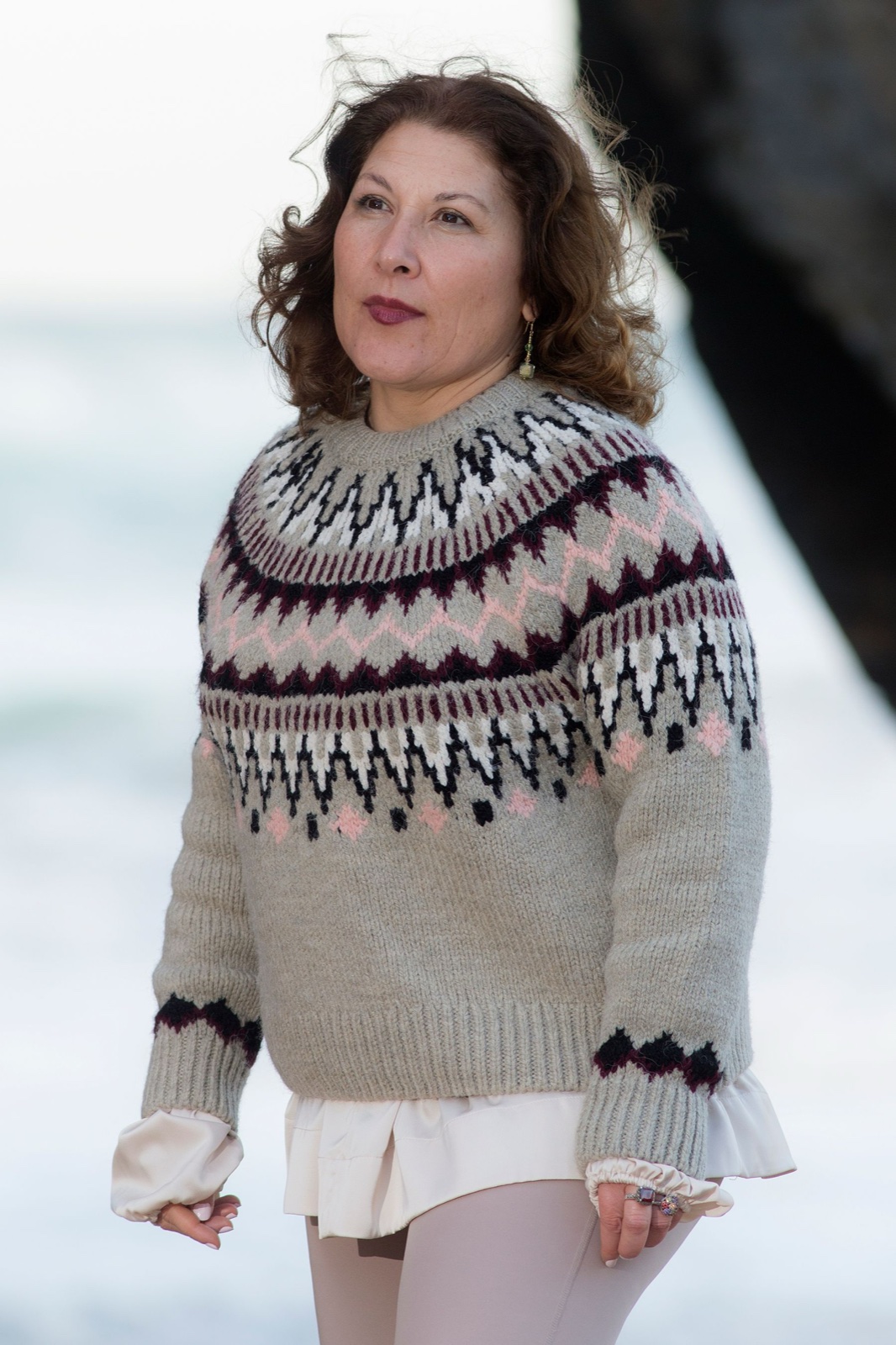
In the 1920s the future Edward VIII wore a patterned jumper on a golf course and the photograph did what photographs do. Orders followed. The name on the garment was Fair Isle, and the Heritage Crafts entry for the craft notes, in a parenthesis it does not bother to dramatise, that the jumper was actually made in Shetland.
So the word was already travelling a hundred years ago. It has kept going.
This autumn it is on socks, on a dog’s back, and on a cardigan whose colourway is called Navy, Dogs.
We are not the right people to tell you what Fair Isle ought to mean. Nobody at this desk has knitted a yoke or handled a Shetland fleece, and we didn’t buy or wear a single thing named below. What we can do is read, so we handed the definition to the organisation that maintains it and then counted the word where it is actually printed.
What does Fair Isle officially mean?
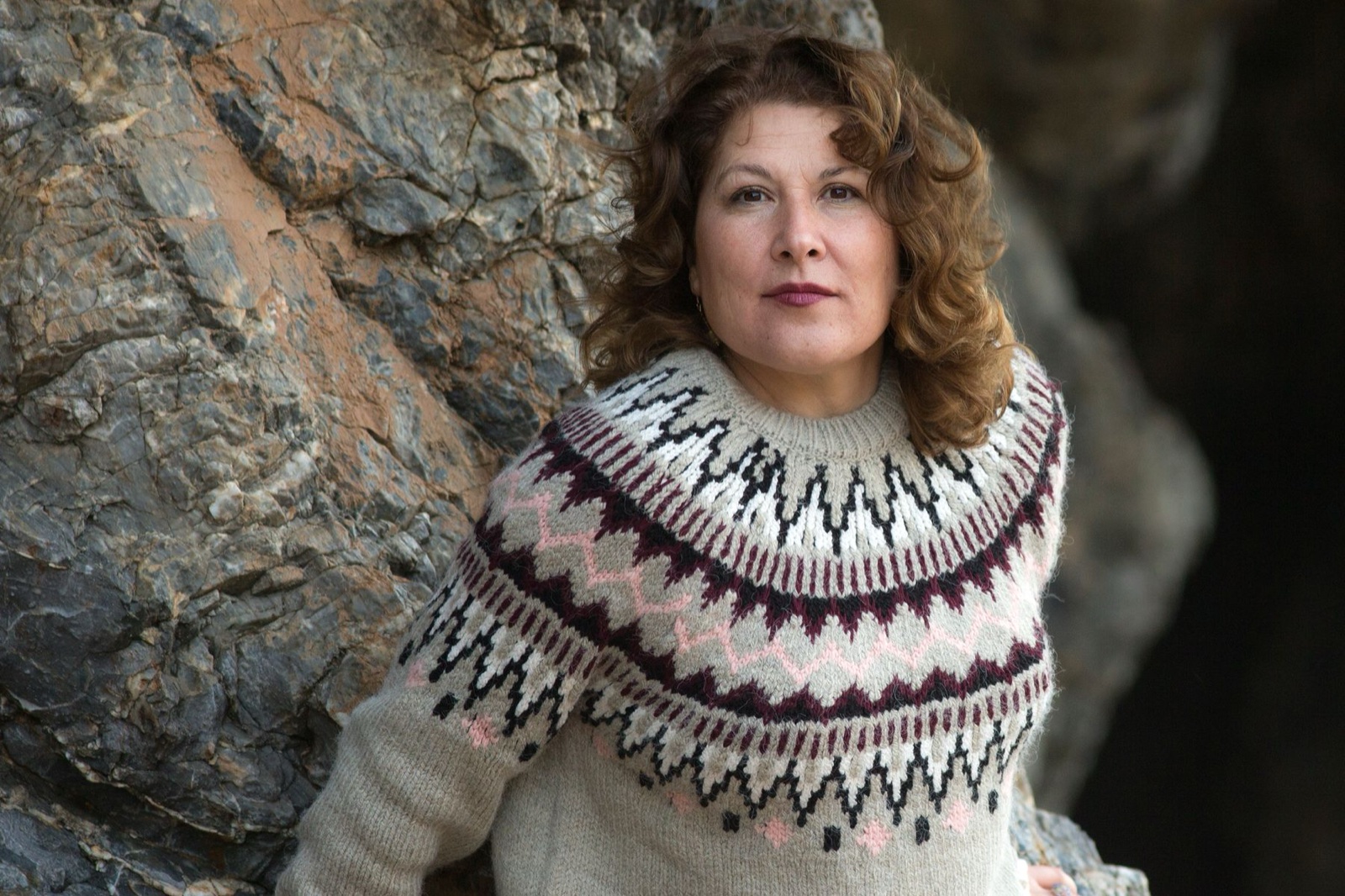
Heritage Crafts, the UK body that runs the Red List of Endangered Crafts, defines the genuine article in one sentence: traditional Fair Isle knitwear uses “100% pure Shetland wool and with no more than two colours in any one row,” with knitters combining geometric motifs of varying sizes across a balanced palette. Two tests, both checkable. One is a fibre. One is a rule about rows, and it’s the more interesting of the pair, because it’s the constraint that produces the look rather than the look itself.
Keep that second test in your hand for the rest of this.
Every stranded row carries two yarns and no more, which is why the back of a real one looks like the front’s shadow, and why the motifs have to be small enough that no float runs long enough to snag a finger. The pattern isn’t decoration applied to a sweater. It’s what happens when you obey the row rule for a few thousand rows.
How many things called Fair Isle are for sale right now?
Boden’s US sitemap published 28,622 product URLs when we pulled it on September 30, 2026, and 451 of them carry “fair-isle” in the slug, which works out to roughly 210 distinct style codes once colourways collapse. Talbots published 2,522 product URLs and seven of them say fair isle. Its sibling brand Haven Well Within published 1,645 and also says it seven times. J.Crew Factory published 1,481 product URLs and says it zero times.
Now count down through what those listings are. At Boden, 140 of the fair-isle URLs sit in womenswear. Fifty-six of the 451 aren’t sweaters at all. They’re socks, hats, scarves, mittens, fingerless gloves, beanies, and two separate jumpers for dogs. At Talbots the seven include one called Squirrel Fair Isle and one called Geo Fair Isle. At Haven Well Within the seven include a triangle scarf and a dog sweater. And at the bottom of the count sits the thing the word came from, which has eight people left.
Does a sweater called Fair Isle have to contain wool?
No composition line we read came close to the Heritage Crafts figure. Here are the fourteen listings we could fully render on September 30, with the wool percentage exactly as the seller prints it.
| Listing | Seller | Wool in composition line | Price |
|---|---|---|---|
| Edie Fair Isle Sweater, Blue Snowman | Boden | 35% | $160 |
| Edie Fair Isle Cardigan, Navy Dogs | Boden | 35% | $90 |
| Chunky Fair Isle Sweater | Boden | 35% | $220 |
| Fair Isle Socks, Pink | Boden | 34% | $35.40 |
| Crewneck Cardigan, Fair Isle | Talbots | 10% | $119 |
| Crewneck Sweater, Geo Fair Isle | Talbots | 10% | $99.50 |
| Crewneck Sweater, Squirrel Fair Isle | Talbots | 10% | $99.50 |
| Embroidered Crewneck, Frost Fair Isle | Talbots | 7% | $109.99 |
| Crewneck Sweater, Spirited Fair Isle | Talbots | 5% | $79.99 |
| Cable Knit Cardigan, Fair Isle | Talbots | 0% | $159 |
| Fair Isle Mockneck Sweater | Haven Well Within | 0% | $148 |
| Fair Isle Dog Sweater | Haven Well Within | 0% | $98 |
| Anna Cashmere Sweater, Coral Fair Isle | Boden | 0% (100% cashmere) | $208.60 |
| Dog Fair Isle Jumper, Mink Melange | Boden | 0% (100% acrylic) | $23.99 |
The ceiling is 35%, and it belongs to a Boden blend printed as 40% polyamide, 35% RWS certified wool, 15% cotton, 10% RAS certified alpaca. Four listings contain no wool whatever. One of those four is cashmere at $208.60, which is a lovely fibre and not a Shetland one. Another is acrylic at $23.99 and is sized for a dog.
Three of the fourteen never claim to be knitted in colour at all. Talbots describes the Frost as “Fair Isle embroidery.” Haven Well Within describes its mockneck as having a “classic fair isle print.” Embroidery and print are both honest words. They’re also both admissions that the row rule was never in play.
Where does the real thing come from, and how much of it is left?
Fair Isle describes itself, on the island’s own website, as “the most geographically remote inhabited island in the United Kingdom,” lying 24 miles from the Shetland Mainland and 27 from North Ronaldsay.
Its knitting is old enough to have a paper trail. Heritage Crafts records three Fair Isle knitters exhibiting at Edinburgh’s International Exhibition of Industry, Science and Art in 1886, and the Scottish National Antarctic Expedition of 1902 to 1904 placing an order with them for roughly 100 sweaters plus stockings, mitts and gloves.
A co-operative ran the trade on the island from 1980 until it wound up in 2011.
What Heritage Crafts counts today is eight professional makers on the island, four taking their main income from it and four taking a side income. Two of the eight are past retirement age. The entry states plainly that there are no younger knitters of employment age coming up behind them, and that the island’s pipeline is two primary school children learning through a scheme called Peerie Makkers. The craft’s status is listed as currently viable, which is the good column, and the numbers underneath it are the numbers above.
Is a 35% wool blend a worse sweater?
Not necessarily, and we’d rather say that early than bury it. The Boden blend machine-washes in the cardigan’s own care line, resists the felting that ends a lot of pure wool, and holds a printed colour better than a soft Shetland yarn does. Pure Shetland wool is scratchy for a reason, and plenty of people who buy a 35% blend are buying exactly the thing they want. Our own reading of composition fields has turned up worse gaps than this one, both when we checked what sellers mean by sherpa and when we read merino labels against the product names above them.
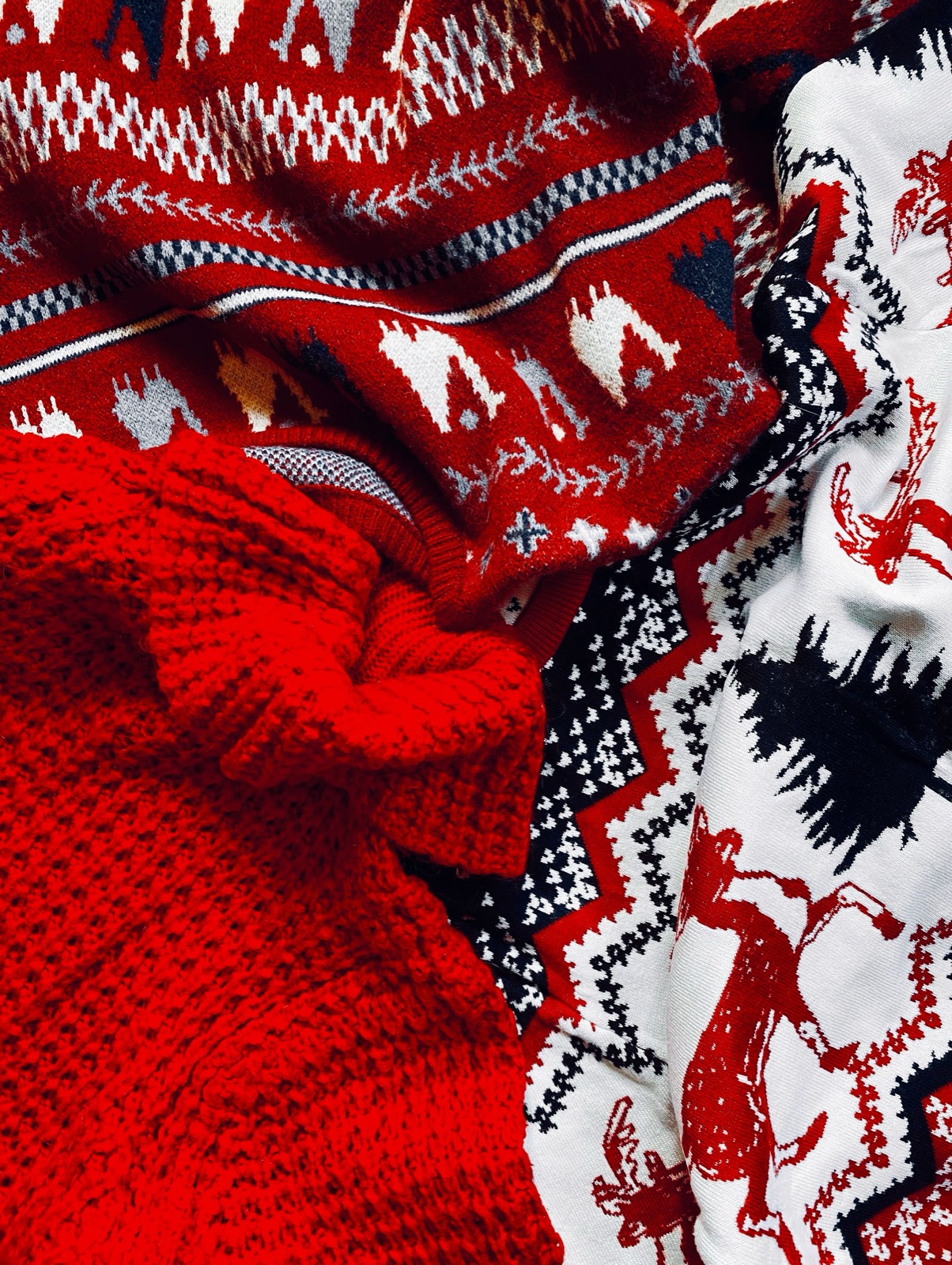
The finding here isn’t that the blends are bad. It’s that the word stopped carrying the information you’d expect it to carry, and it stopped quietly. Boden sells an Edie Fair Isle Cardigan in colourways named Pink Reindeer, Ecru Marl Fruit, Meadowsweet Pink Flowers and Navy, Dogs. A pattern name that survives its own pattern being replaced by dogs is no longer a pattern name. It’s a silhouette name.
What should you actually check before buying one?
Read the composition line and ignore the product name entirely, because the name is doing marketing and the composition line is doing compliance. If the description says print or embroidery, you’re buying a picture of colourwork rather than colourwork, which may be fine and is worth knowing for $109.99. If the word Shetland appears nowhere on the page, the wool isn’t Shetland. And if you want the real thing, the word you’re searching for is the maker’s name, not the pattern’s.
One note on method, since it affects what we could and couldn’t check. This desk fetches from Seoul, and L.L.Bean’s site routed us to its Korea store and quoted every price in won, so we left its listings out of the table rather than convert numbers that were never shown to a US shopper. Talbots, Haven Well Within and Boden all served US pages in dollars. Four of the fourteen Talbots and Haven Well Within pages returned an empty shell on some attempts, so the seven-of-2,522 count comes from the sitemaps rather than from the pages.
Which brings back the golf photograph. It’s a good story and we opened with it because everyone does, but it turns out to be the wrong frame, since the jumper in it was already made somewhere else. There was no golden moment when the word meant one thing and then fell. The word left the island before the cameras got there, and the eight people still knitting on it are not competing with 451 product URLs for a name. They never had it.