What Is 8-Wale Corduroy? How to Read Fall's Biggest Pant, No Textile Degree Required
Corduroy owns the fall 2026 pant conversation, and one number decides the texture, the weight and the dress code of every pair. ThreadGloss pulled the fabric line on six product pages at four major retailers, then read the tailors and fabric shops that count in public. The two lists barely speak the same language.
 ·
· 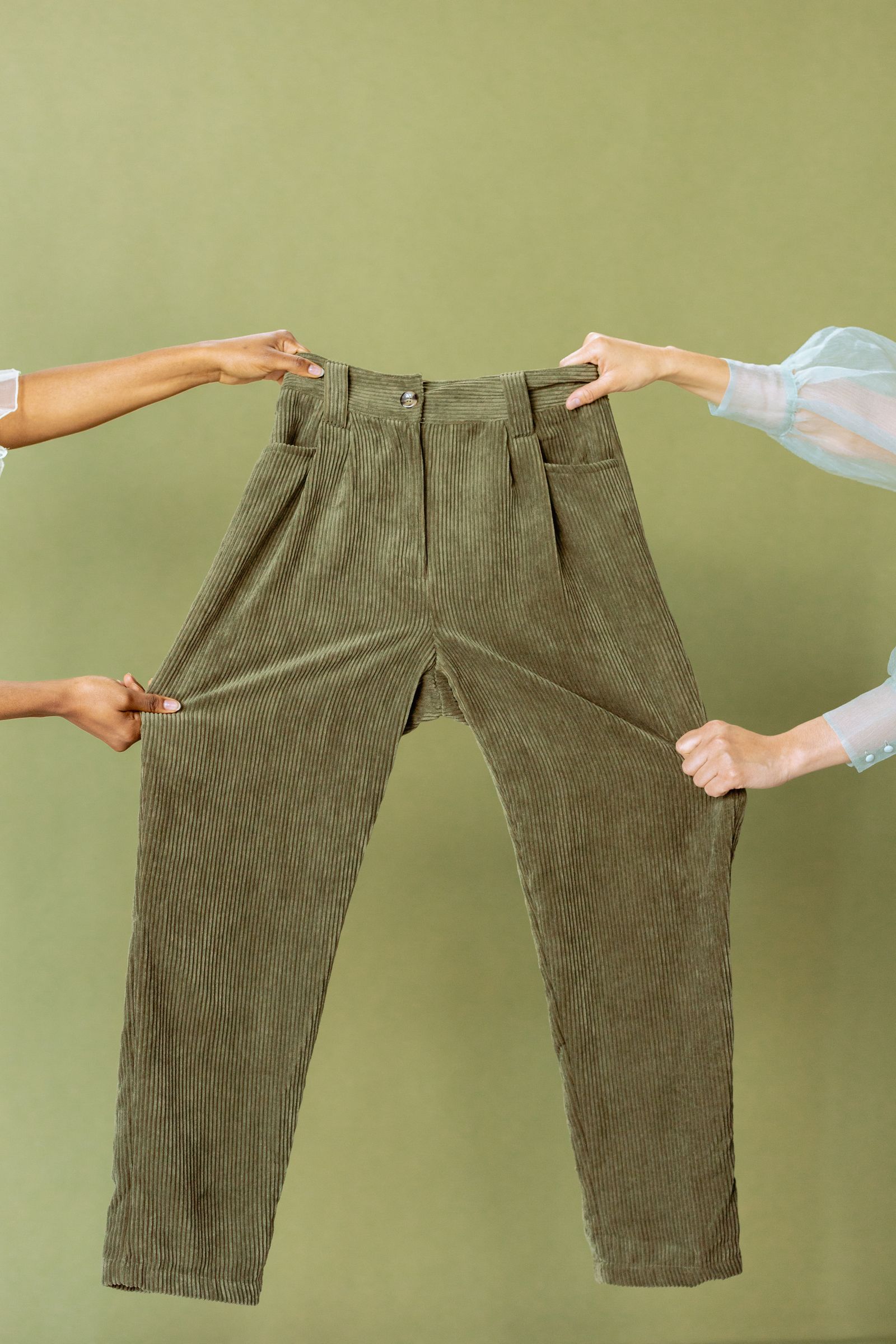
Corduroy gets sold in two vocabularies. The first is adjectives, and it lives in product names: wide, chunky, vintage, authentic, relaxed. The second is percentages, and it lives under the Materials tab: 100% cotton, or 78% cotton with a splash of modal. There’s a third vocabulary, older than either, that actually predicts what texture shows up in the box. It’s one number. Most of the pages selling this fall’s most recommended pant never print it.
The discourse around that pant is enormous right now. Corduroy sits in Who What Wear’s October shopping predictions and in most of the fall trend lists ThreadGloss has cross-referenced since August, usually next to the words chocolate brown. This piece ignores the discourse and zooms all the way in, past the color, past the cut, to the ridges on the fabric itself. Standard disclosure first: nobody at this desk has bought or worn any pair named below. Every claim here was read off a public page on September 30, 2026, by a desk that fetches from Seoul, and where geography changed what a page would show, that’s disclosed too.
What does the wale number actually count?
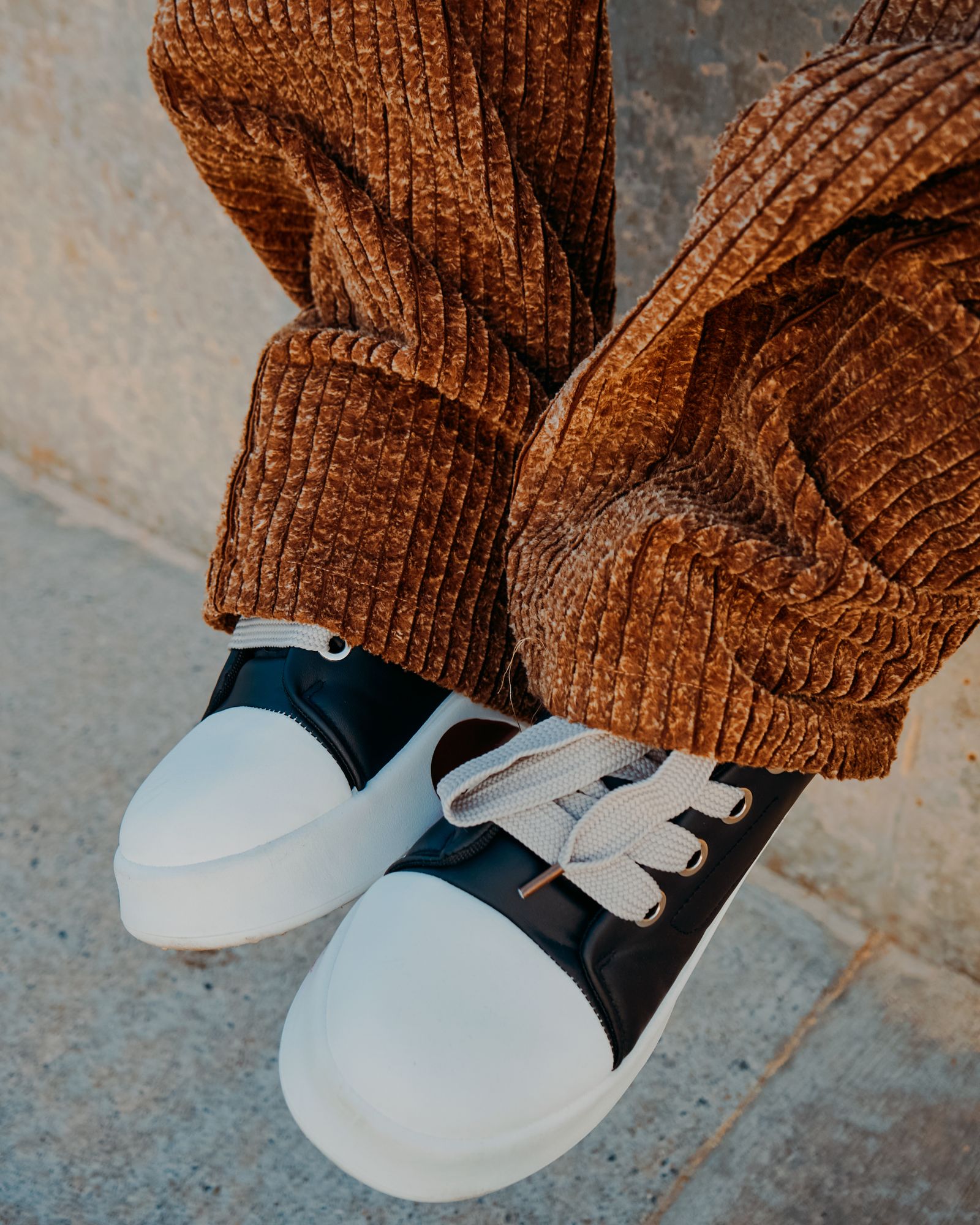
A wale is one of the raised cotton ridges that run the length of corduroy, and the wale count is how many of those ridges fit across one inch of fabric. Wikipedia’s corduroy entry states the convention plainly: the width of the wales is specified by wale count, and the lower the number, the thicker each ridge. An 8-wale corduroy has 8 fat ridges per inch. A 16-wale has 16 fine ones. The number is a ruler reading, not a marketing tier, which is exactly what makes it useful.
The fabric trade sorts the whole spectrum into named bands. Fabrics Galore, a London fabric shop, publishes the chart on an undated guide page:
| Corduroy type | Wales per inch |
|---|---|
| Jumbo cord | 3 to 10 |
| Standard corduroy | 11 to 14 |
| Needlecord | 14 to 18 |
| Pin cord | 18 to 22 |
| Baby cord | 22 to 25 |
Berle, a Charleston trouser maker, adds the luxury end on its own undated glossary: Italian corduroy runs 16 to 21 wales per inch and sometimes reaches 30, and in Berle’s words, a lower count like 8 or 11 is “perfect for casual days” while a high count suits “a much dressier occasion.” One practical note rides along in the same guide: the coarser wales can take a gentle machine cycle, while the fine stuff earns more caution. So the single number carries texture, formality and laundry all at once.
Pull up the fabric line on the pants in your cart
ThreadGloss read six corduroy pants pages at four of the retailers anchoring this fall’s corduroy tables, plus the one direct-to-consumer page that behaves differently. The question was narrow. Fiber is always printed. Is the wale?
| Seller and pant | Fabric line printed | Wale printed |
|---|---|---|
| Gap High Rise Corduroy Barrel | “100% Cotton,” “authentic non-stretch” | No |
| Gap High Rise Corduroy ’90s Slim Straight | “99% Cotton, 1% Elastane” | No |
| Old Navy High-Waisted Corduroy Wide-Leg | “100% Cotton” | No |
| Old Navy Extra High-Waisted Sky-Hi Wide-Leg | “100% Cotton” | No |
| Madewell Balloon Pant in Corduroy | “78% cotton/21% modal/1% elastane” | No |
| Madewell Low-Rise Loose Pant in Corduroy | “100% cotton” | No |
| Everlane Wide Wale Corduroy Trouser | Organic cotton corduroy | Yes: “6-wale” |
Six of the seven pages did not print a wale count anywhere ThreadGloss could find, and the six belong to the four biggest names on the list. The one page that did, Everlane’s, puts the number in a full sentence: a “wide, pronounced rib, known as 6-wale.” Note where that page sits. It’s a menswear trouser. On the womenswear pages, where the trend actually lives this season, the count was absent at every retailer read.
The fair reading of that absence runs further than you’d think, and it deserves most of the airtime here. Fiber percentages are the line shoppers actually use, because they answer the washing machine question. Product photos zoom far enough on every one of these pages to show the rib plainly, so your eyes can do what the spec sheet won’t. And an adjective like chunky, backed by a good photo, serves most people better than a number they’d have to look up. Nobody is hiding a defect. The stores just aren’t speaking the one vocabulary that would let you compare their rib to another store’s rib without both pairs on your desk.
What is 8-wale corduroy, then?
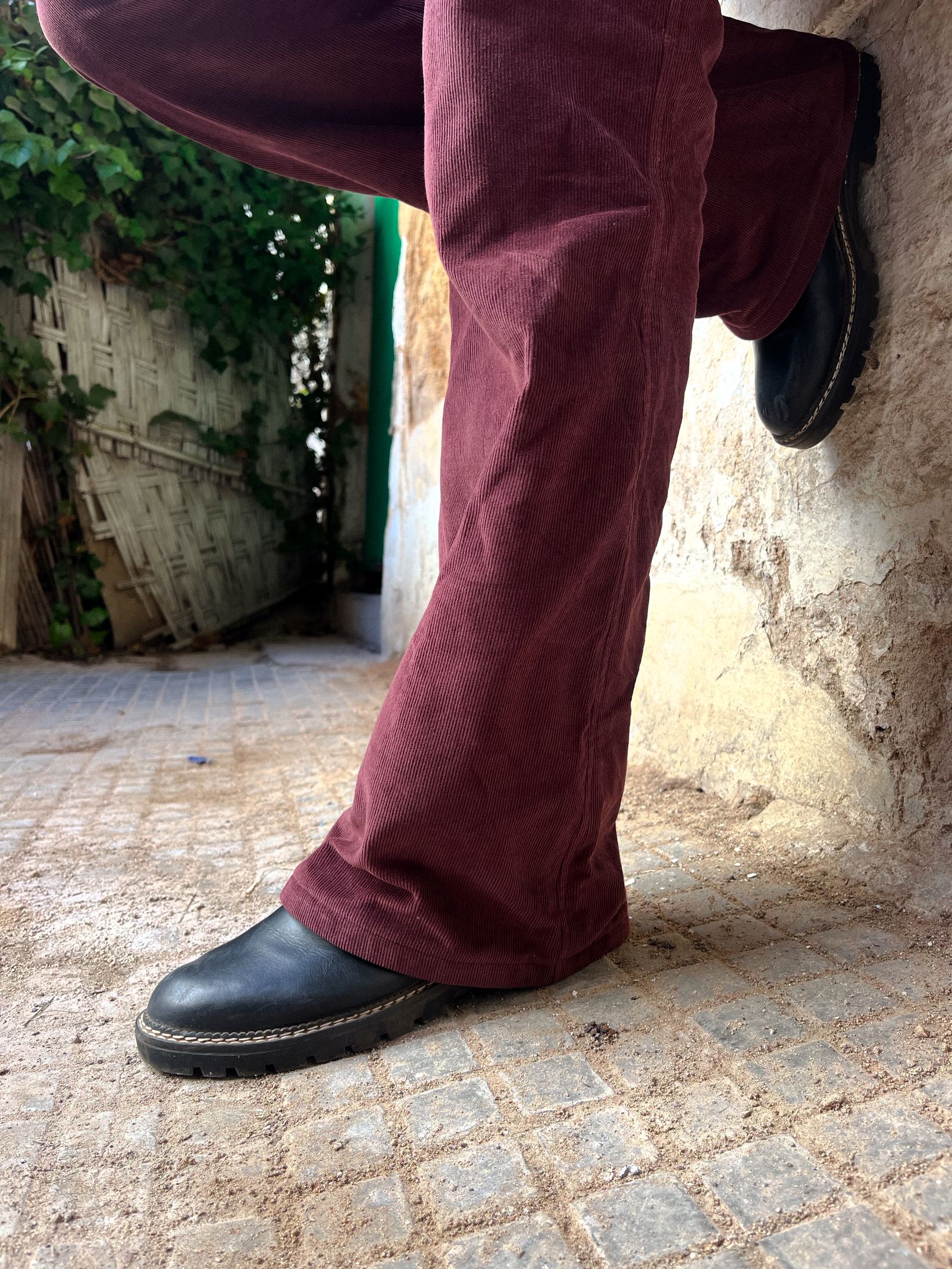
An 8-wale corduroy carries 8 ridges per inch, which lands it in the chunky, visibly ribbed territory on the Fabrics Galore chart, below the 11-wale that Bookster, a British tailoring house, flatly calls standard. Bookster prints the number right in the product name of its Hunter 8 Wale cloth. Berle files both 8 and 11 under casual days.
Watch what happens to the adjectives, though. Everlane’s 6-wale is named “Wide Wale.” Bookster’s 8-wale is a country cloth. The trade chart calls everything from 3 to 10 jumbo. Three sellers, three labels, one narrow band of numbers, and the word wide has no fixed address among them. Adjectives drift. The count doesn’t, and this is the same trade-vocabulary gap this desk has walked through on denier in tights, fill power in puffers and ply in cashmere. A number printed at the source beats a word invented in the marketing meeting, every time it’s actually printed.
Count the ridges yourself
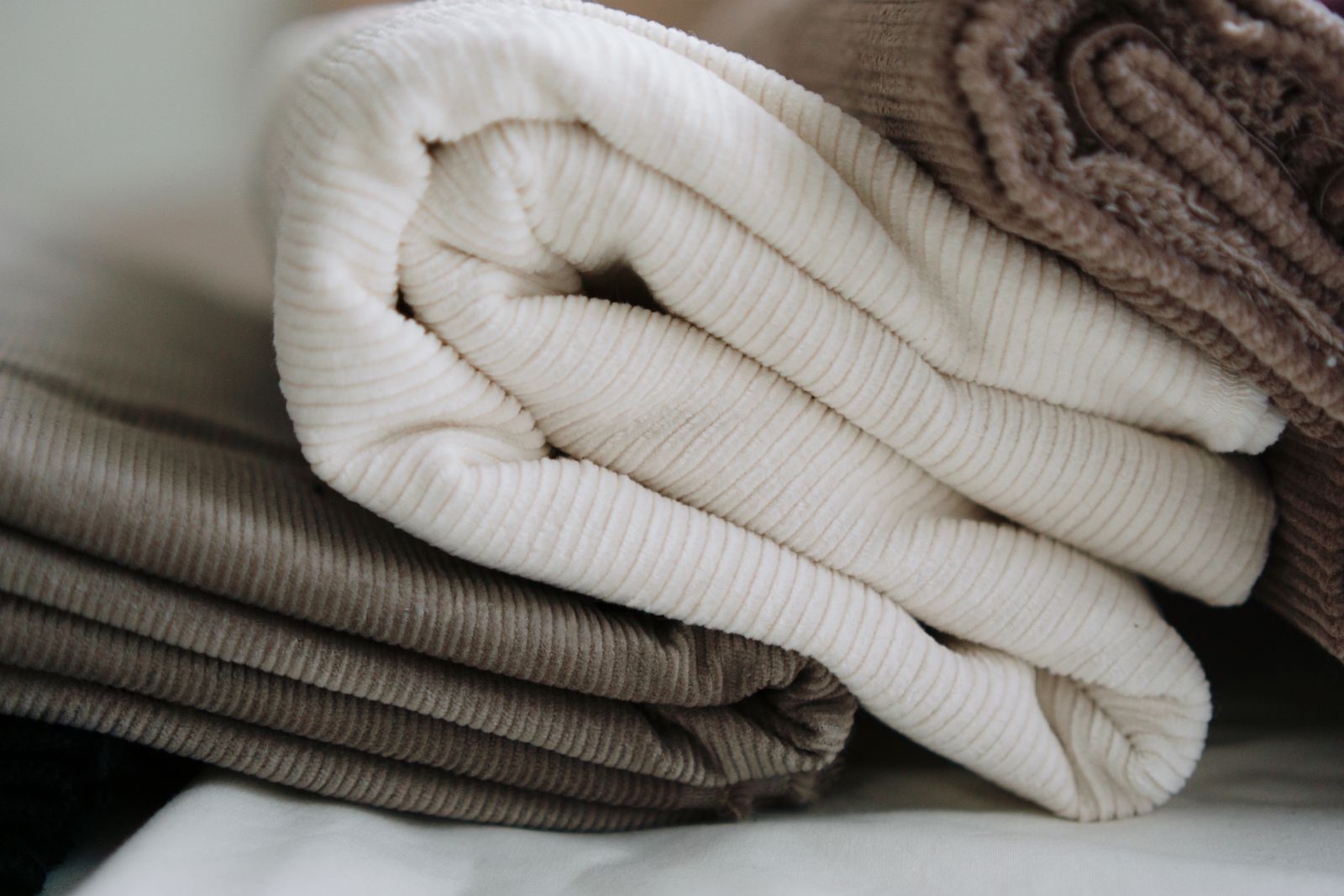
The workaround costs nothing. Corduroy is the rare fabric whose spec is visible to the naked eye, so when a pair arrives, or when you’re standing in the store, lay a ruler across the ribs and count how many ridges cross one inch. Under 10, you’re holding jumbo-adjacent chunk. Around 11 to 14, standard. Above 16, the fine dressy stuff Berle sells as Italian. On a product page with no printed count, zoom the flat-lay photo and compare rib width against a pair you already own and have counted. Approximate, yes. Better than trusting chunky, also yes.
What ThreadGloss couldn’t read gets named here rather than guessed at. J.Crew’s page rerouted this desk’s reader to its Korean storefront and Abercrombie’s to a worldwide one, so neither US page gets quoted. L.L.Bean redirected to a global gateway, Uniqlo’s page timed out twice, and Permanent Style, the menswear site with the best-regarded corduroy guide in print, returned a 403 to an automated reader. None of their pants appear in the table, and their absence is routing, not judgment.
One number, no drama: for this desk’s money, the wale count is the most legible spec in all of fall fabric literacy, and the pages selling the trend mostly leave it off. The people who cut trousers for a living don’t. They also don’t leave the dress code to vibes. Berle’s own glossary closes the question in one line: “low wale count is for casual purposes and high wale count is for a much dressier occasion.” By the printers’ own definition, the pant of fall 2026 is the casual one. Buy it knowing its number.