Is J.Crew Factory the Same as J.Crew? The Sweater Pages, Read Line by Line
One crewneck says Merino Wool-blend and costs $66 this week. The mainline store sells sweaters with one-word fiber lines and no blend at all. We pulled four Factory sweater pages, the pricing fine print, the returns policy and the full product sitemap on September 30, and wrote down what each document admits.
 ·
· 
The folk theory of the outlet store fits in one sentence: it’s where last season’s clothes go to get cheap. People say it warmly, like they’re letting you in on something. I believed it for years, and it has the same problem most warm sentences have. Nobody checks it against a product page.
So we checked. On September 30, 2026, this desk read four sweater pages at factory.jcrew.com, the site’s own pricing fine print, its returns policy, and both of its published product sitemaps, 1,481 product URLs in all. The sweater we kept returning to was the Merino Wool-blend Crewneck: list price $110, selling that day for $66, with one line printed under the product details that settles most of the argument. Standard disclosure first. Nobody here has bought or worn anything named below, every number is a seller’s printed line in USD, and this desk fetches from Seoul, which matters once: jcrew.com, the mainline site, reroutes Korean traffic to a local storefront, so every mainline reading below comes from a page that doesn’t reroute. Where that substitution happens, we say so.
Is J.Crew Factory an outlet?
J.Crew Factory sells at outlet prices, but what it sells is its own line, which the brand’s About page calls “our exclusive collection of colorful styles for women, men and kids.” Exclusive is doing quiet work in that sentence. The stock didn’t ride a truck from a J.Crew store. It was made to be sold here, the same arrangement we found at Banana Republic Factory when we read both of that brand’s polo pages on September 7. Same holding company, same architecture: a mainline label and a made-for-outlet label wearing one name.
Here’s the good news, and we mean it. Nothing on the Factory sweater wall is hidden. Every product page we opened prints its full fiber recipe, to the percent, right under the name. The catch never lives in the percentages. It lives in the names that sit on top of them, and that’s the part you can learn to read in about four minutes.
Four sweaters, three lines each
We gave every sweater the same reading: the name on the page, the fiber line under it, the number under the strikethrough. All four were read on September 30, 2026.
The Merino Wool-blend Crewneck, men’s
The name on the page: Merino Wool-blend Crewneck Sweater. The fiber line: 51% merino wool, 49% acrylic. The numbers: $110 list, $66 that day. The name is technically true and maximally generous. One more percentage point of acrylic and the merino stops being the majority partner.
The Crewneck Sweater in Extra-Soft Yarn, women’s
The name on the page: Crewneck Sweater in Extra-Soft Yarn. The fiber line: 55% acrylic, 35% polyamide, 7% wool, 3% elastane. The numbers: $98 list, $58.50 that day. Extra-soft yarn isn’t a fiber. It’s a mood. The animal content of this sweater is 7%.
The V-neck Sweater in Cotton-Soft Blend, women’s
The name on the page: V-neck Sweater in Cotton-Soft Blend. The fiber line: 55% cotton, 31% polyester, 10% acrylic, 4% elastane. The numbers: $110 list, $66 that day. Cotton-soft is an adjective wearing a fiber’s clothes, though here the cotton at least holds a majority.
The Wool-Blend Boyfriend Sweater, women’s
The name on the page: Wool-Blend Boyfriend Sweater. The fiber line: 40% cotton, 35% polyamide, 25% wool. The numbers: $98 list, $49 that day. Wool gets the billing and the bronze medal. A shopper’s review on the same page put it more cheerfully than we ever could: “Only 25% wool so not itchy or sweaty.”
| Sweater | What the name suggests | What the fiber line prints | List → Sept 30 |
|---|---|---|---|
| Merino Wool-blend Crewneck | mostly merino | 51% merino / 49% acrylic | $110 → $66 |
| Crewneck in Extra-Soft Yarn | softness, unspecified | 55% acrylic / 35% polyamide / 7% wool / 3% elastane | $98 → $58.50 |
| V-neck in Cotton-Soft Blend | cotton comfort | 55% cotton / 31% polyester / 10% acrylic / 4% elastane | $110 → $66 |
| Wool-Blend Boyfriend | a wool sweater | 40% cotton / 35% polyamide / 25% wool | $98 → $49 |
Is J.Crew Factory worse quality?
Factory sweaters run on blends where the mainline’s icons run on single fibers, and the pages admit it in full. Whether that’s worse depends on what you’re buying a sweater to do. Acrylic blends survive the washing machine, shrug off moths and hold their dye, and there’s no rule that says a $66 sweater owes you a sheep. The honest reading is a different recipe at a different price, printed in public. An independent blogger at Styled by Science, Vianna, ran side-by-side fiber checks in a piece published in November 2020 and updated in October 2022, and found cases where the Factory version matched or beat the mainline fabric, a 100% cotton Factory sweater blazer against a mainline cotton, polyester and wool mix. Her sample is older than this fall’s wall, but it’s the useful caution: the outlet label doesn’t automatically mean the lesser cloth.
What we can’t call honest-by-accident is the vocabulary. The same company prints “Merino Wool-blend” over 51% merino, “Wool-Blend” over 25% wool, and “Extra-Soft Yarn” over 7% wool. Three names, three different distances from the animal, and only the fine gray line beneath each one tells you which is which. We’ve read merino labels this way before, and the rule holds here: the name is marketing, the percentage is a contract.
What does Comparable Value mean on the price?
Every strikethrough we saw at J.Crew Factory carried the label “Comparable value,” not “was.” The site’s own help page defines the term, and the definition deserves to be read whole: “Our Comparable Value (or Comp. Value) prices are based on prices at which similar merchandise has been offered for sale either by J.Crew or other retailers or websites. As market prices often fluctuate, we encourage you to do your own comparison shopping to see what great value we offer.”
Read that twice. The $110 over the $66 crewneck isn’t a price this sweater used to sell for. It’s an estimate of what similar things have been offered for, somewhere, by someone, and the company’s own fine print closes by inviting you to go verify it yourself. We covered the lawsuit history this style of pricing earned Gap’s factory channel in the Banana Republic piece, so we won’t rerun it. The one-line version: at a made-for-outlet store, the discount is the price.
Can you return J.Crew Factory clothes at J.Crew?
No returns cross the wall, and the wall is printed. The Factory returns page states it flatly: “J.Crew Factory merchandise cannot be returned to J.Crew locations.” Two labels, one logo, separate bloodstreams. The assortment says the same thing louder. We searched all 1,481 product URLs in the Factory sitemaps for the mainline’s signature fibers. The word cashmere appears zero times. Lambswool, zero. Rollneck, the mainline’s famous 1988 sweater, zero. The word wool shows up in 18 URLs out of 1,481, and you’ve now met the two sweaters at the top of that list. Meanwhile the mainline J.Crew items we could still read from Seoul, on Nordstrom product pages, print fiber lines with no arithmetic in them: “100% cashmere” on the Crewneck Cashmere Sweater, “100% cotton” on the 1988 Roll Neck, both sold out at Nordstrom on the day we looked. When we read the Rollneck’s own page earlier this month, its solids listed at $98, about what the Factory charges for 25% wool before the discount theater starts.
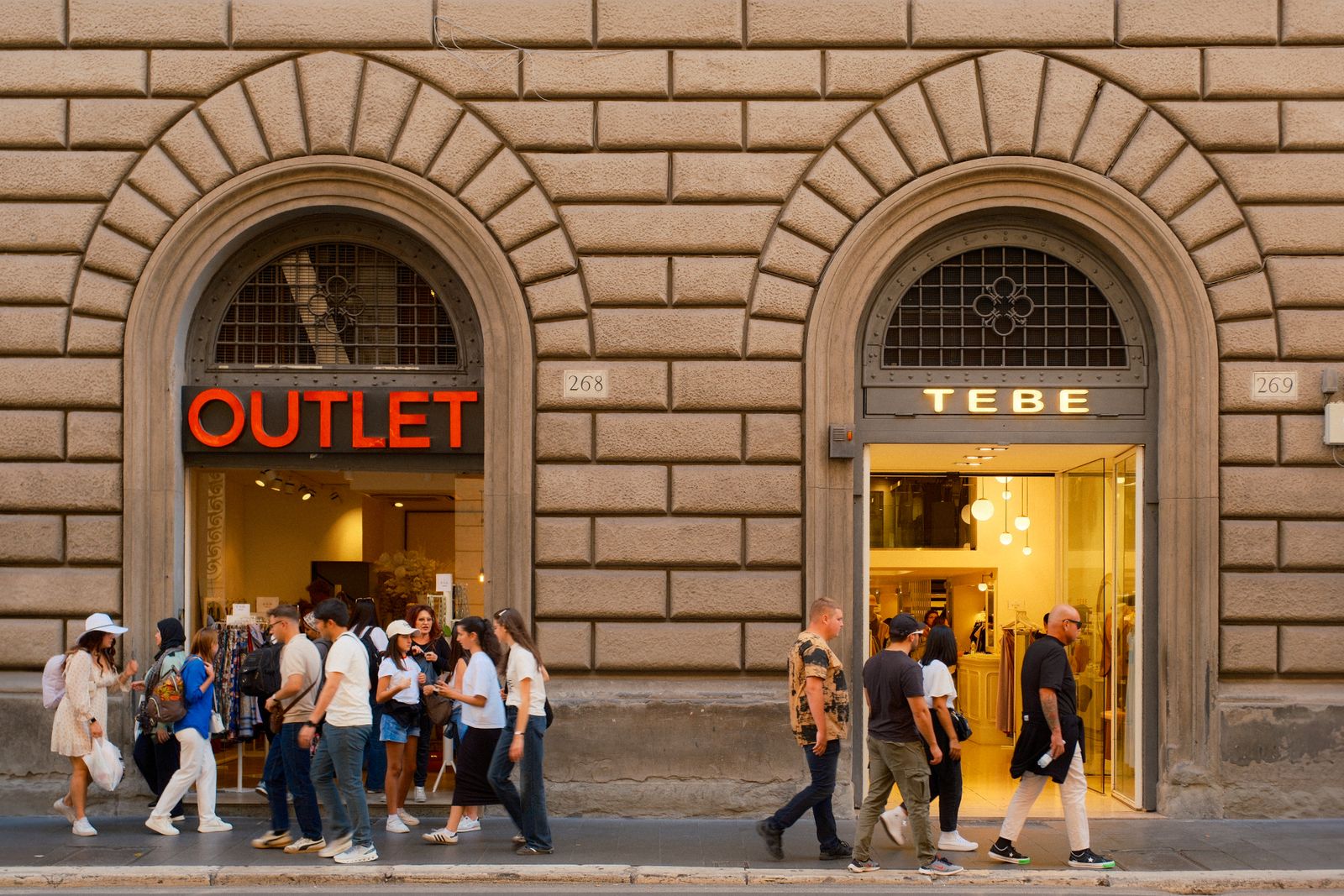
Our verdict runs the same direction as our outlet-quality audit from August: you’re allowed to love the Factory version. Plenty of people should buy the $49 sweater over the $98 one, and the pages give you everything you need to choose it on purpose. Just don’t buy it believing the folk theory. You’re not catching last season’s sweater on its way down. You’re buying this season’s other sweater, from the other company that shares the font.
By the weekend, the $66 under the Merino Wool-blend Crewneck will likely be a different number. Comparable Value math moves with the banner, and the banner changes more often than the weather. The 51% will still be 51%. Read that line first. The strikethrough can wait.