Are Size Charts Body Measurements or Garment Measurements? We Read Five Charts to Find Out
Madewell's chart says YOUR WAIST. Levi's says to wrap the tape just above your belly button. Old Navy wants it against your skin. Not one of the five charts we read prints the phrase that would settle the question, and the companies that build charts for retailers admit the two readings can sit 20 centimeters apart.
 ·
· 
Look closely at the column header on Madewell’s denim chart. YOUR WAIST, it reads, in small caps, above a run of numbers that starts at 23. Next to it, YOUR HIP. Over on the tops chart, YOUR BUST. Four letters of pronoun, easy to scroll past, and we’ve all scrolled past them a thousand times.
We’ve also all played the other side of this game. You pull up a chart, find a 28, and wonder what exactly is 28 inches here. The waistband you’d be buying? The waist you’d be putting in it? Those are different numbers on purpose, and the chart rarely says which one it’s holding. People ask Google “are size charts body measurements or garment measurements” often enough that autocomplete finishes the sentence, and the same question runs through sewing forums and the review sections of half the internet.
So this desk spent October 4 reading charts instead of guessing. The usual disclosure applies. Nobody here tried anything on, because there’s nothing to try on. What follows comes from published size pages at Madewell, Levi’s, Old Navy and Wrangler, all read October 4, plus a Ted Baker size PDF this desk pulled in its August chart audit. Abercrombie’s page refused to open for us, American Eagle’s charts never render as readable text, ASOS’s robots file wouldn’t answer at all, and the Gap women’s chart hides in a pop-up we could only locate for kids’ clothes. We say so because a chart we couldn’t read is not a chart that agrees with us.
Every chart we could open is a body chart
All five readable charts describe a person, not a product. Not one of them lists the finished garment’s dimensions. Here’s the panel, column headers transcribed as printed:
| Chart read | Columns as printed | Says “body” or “garment”? | Where its instructions point the tape |
|---|---|---|---|
| Madewell women’s, Oct 4 | US SIZE, YOUR WAIST, YOUR HIP, YOUR BUST | Neither. One pronoun: YOUR | At you (“check your waist and hip measurements”) |
| Madewell men’s, Oct 4 | CHEST, NECK, ARM LENGTH, WAIST | Neither, and no pronoun | At you, per the FAQ |
| Levi’s size guide, Oct 4 | Size, Waist (in), Hips (in), Inseam (in) | Neither | “around your natural waistline, just above your belly button” |
| Old Navy women’s plus, Oct 4 | Size, waist, hips/seat | Neither | “against your skin, but not indenting it” |
| Wrangler women’s, Oct 4 | Alpha, Size, Waist, Hips | Neither | “we recommend you measure without clothing on” |
| Ted Baker PDF, Aug 24 | BUST, WAIST, HIPS per size | Neither | No instructions in the PDF |
Read that third column again. Five charts, zero labels.
The evidence that these are body charts is real but entirely circumstantial: a pronoun here, a belly button there, a tape pressed to bare skin at Old Navy and Wrangler. You’re expected to deduce the single most important fact about the document from its stage directions.
The real label is hidden inside the measuring ritual
Each brand’s “how to measure” text is doing the job the missing label should do, and it’s doing it in oddly identical words. Levi’s tells us to wrap the tape “around your natural waistline, just above your belly button. Keep it snug, but not too tight.” Old Navy’s tips want the tape “against your skin, but not indenting it.” Wrangler goes further and recommends we “measure without clothing on.”
Skin. Belly buttons. No clothing. A garment spec sheet would never say any of that, which is the entire tell. If the ritual aims a tape at your body, the numbers beside it describe bodies.
Then there’s the sentence that appears twice. Old Navy: “If you don’t have a measuring tape, use a piece of string and hold it alongside a ruler.” Wrangler, a competitor owned by a different corporation, prints the same sentence, word for word. Two rivals sharing boilerplate tells us something we’d rather not know: nobody is writing these pages for readers. They’re assembled, the way furniture instructions are assembled, and the one sentence a shopper actually needs didn’t make the template.
Madewell comes closest to honesty, and it does so by accident of grammar. YOUR WAIST can only mean one thing. Its own FAQ then confirms the reading: “A women’s jeans size 28 refers to a 29-inch waist measurement.” Note what happened there. The tag number, 28, refers to a body number, 29, a one-inch drift we’ve measured before. Even the brand that labels the referent won’t let the referent equal the tag.
The chart industry writes the missing sentence in its manuals instead
Companies that sell size-chart software to retailers explain body versus garment constantly, just never to us. SmartSize, a fit-recommendation vendor, puts it plainly in its merchant documentation, read October 4: “SmartSize expects body measurements.” Its help page even coaches store owners on the grammar of the thing. Ask yourself, it says, whether “a customer with a body chest measurement of X cm would fit into Size M,” not whether “Size M has a garment chest measurement of X cm.”
Shopify’s merchant guide to sizing charts, published September 2025, teaches both formats and names the difference: body charts match sizes to the dimensions of the person, garment charts “list the finished specs of the item itself.” Then it adds, “Many brands now provide both.” Among our five, zero provide both. The same guide cites a 2025 survey of 6,000 consumers in which 61 percent had returned clothing over fit, which is the bill for all this, and the fit-tech vendors selling the cure quote that bill to stores, not shoppers.
Misreading the referent costs whole sizes, by the industry’s own math
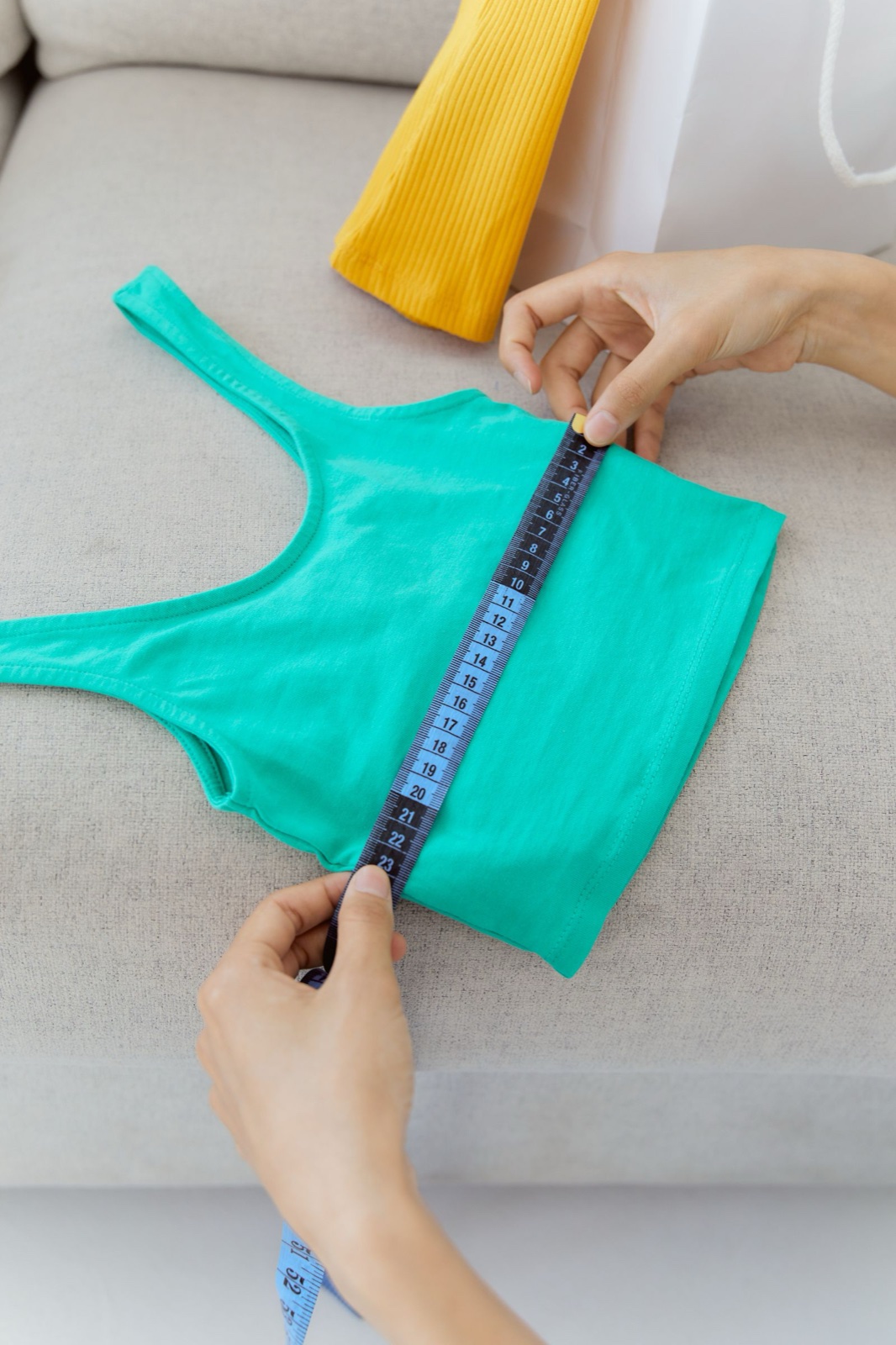
The distance between the two readings is called ease, the room a garment carries beyond the body inside it, and the chart builders publish numbers for it. SmartSize’s conversion guide tells merchants moving from garment charts to body charts to subtract 2 to 5 centimeters for a slim fit, 5 to 10 for regular, and 10 to 20 for relaxed or oversized cuts. Its own worked example turns a medium shirt’s 52-centimeter flat chest into a 104-centimeter circumference and lands on a 96-centimeter body.
Now put that against a real chart. Ted Baker’s bust row steps 5 centimeters per size. A 10-to-20-centimeter misread, the oversized case, is two to four label sizes. Mistake a garment chart for a body chart in an oversized cut and you haven’t fudged a fit, you’ve changed size neighborhoods. That’s a different failure from the one we documented across seven UK charts in August, where the charts disagreed with each other. Here a single chart, read two reasonable ways, disagrees with itself by more than the gap between brands.
Could the convention be obvious enough that nobody needs the label? The forums answer that one. The question keeps getting asked precisely because secondhand listings normalized flat garment measurements while retail charts stayed on bodies, and both arrive as a bare word, waist, with a number after it.
Are size charts body measurements or garment measurements?
Mainstream US retail size charts are body measurement charts in every case this desk could verify: the numbers describe the person each size is cut to fit, with the garment’s wearing room added invisibly on top. All five readable charts in our October panel work this way, and the sizing industry’s own documentation treats body charts as the default retailers should publish. Garment measurement charts, which list the finished item’s flat dimensions, are the convention of resale listings, menswear specialists and some oversized-cut brands, and when a chart is one of those it usually says so with phrases like “garment measurements” or “laid flat.”
So measure yourself the way the brand’s ritual says, compare against the chart directly, and don’t add ease on your own. The brand already did.
How do you tell which chart you’re reading?
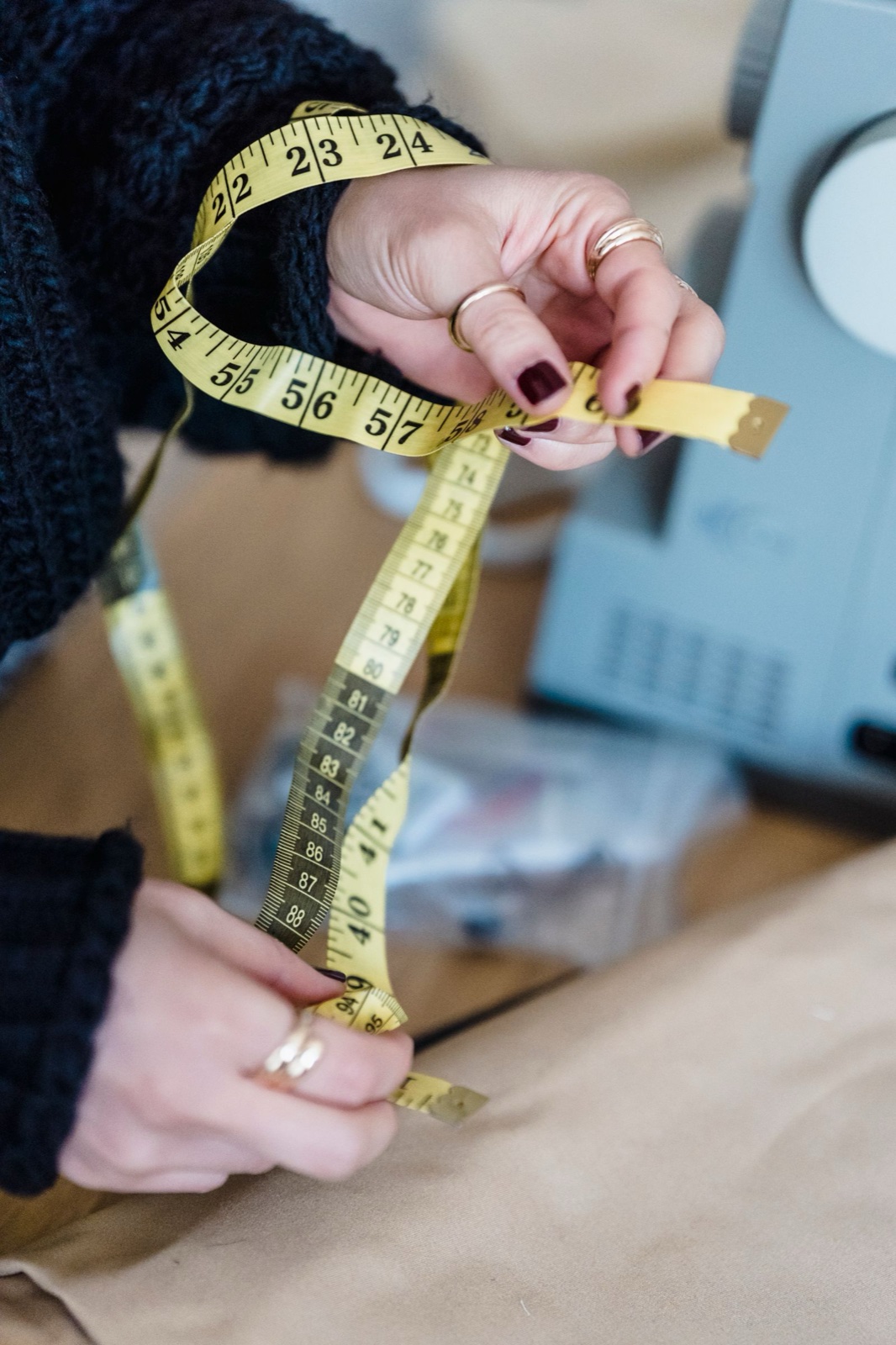
Four tells sort nearly every chart, in about ten seconds. First, hunt for a pronoun or the phrase “to fit.” YOUR WAIST and “to fit bust” mean body. Second, read the measuring instructions. A tape against skin, around a belly button, with no clothing on, means body. “Lay the item flat” means garment. Third, look for halved words, chest width, pit to pit, across shoulders. Flat widths are garment language, since nobody measures half of themselves. Fourth, sanity-check the numbers against the tag logic. When a size 28 sits beside a 29, that’s a body chart admitting the tag runs a size behind the tape. When a medium shows a 52 where you expected a 44, you’ve found a flat garment spec, so double it and subtract the ease the seller didn’t disclose.
And if the chart fails all four tests? We’d tell you to email customer service, but we’ve read enough templates this week to guess who’d be answering. Keep a string and a ruler handy. Apparently everyone else does.